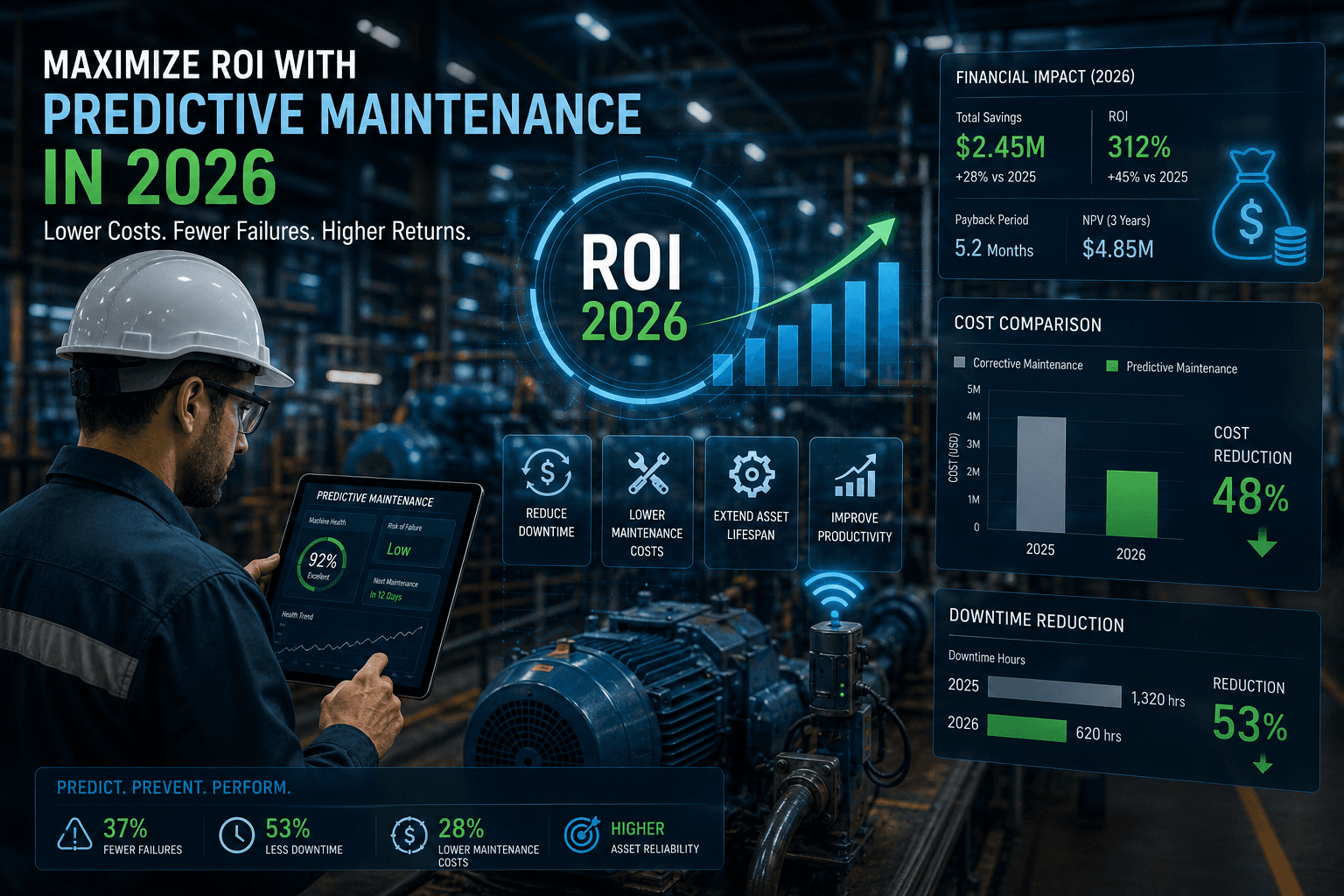
Most facility managers know predictive maintenance is the right approach. They have known it for years. The problem is that switching from reactive to predictive always felt like a big project, requiring budget sign off, new systems, a dedicated team and months of implementation.
So most teams kept doing what they always did. Fix it when it breaks.
This blog is not here to lecture you about that decision. It is here to show you exactly what it is costing you, and why the gap between reactive and predictive operations is wider in 2026 than it has ever been.
What Reactive Maintenance Actually Looks Like Day to Day
Reactive maintenance feels manageable until it is not.
On a good week, your team handles the jobs that come in, closes the work orders and everything looks fine on paper. But underneath that, there is a constant low level pressure that never quite goes away.
Equipment breaks at the worst possible time. A critical HVAC unit fails on the hottest day of the year. A lift goes down in a building with no alternative access. A fire suppression system throws an error at 11pm on a Friday. Your team scrambles, contractors are called at emergency rates, and the cost of that single reactive job is three to five times what planned maintenance would have cost.
And the thing is, none of these failures come out of nowhere. Every piece of equipment gives signals before it fails. Temperature spikes. Unusual vibration patterns. Power consumption changes. The data is there. It just never gets analysed in time.
That is the real problem with reactive maintenance. It is not that your team is doing a bad job. It is that the information they need to act early is buried in systems that were never designed to surface it automatically.
The Numbers That Should Make You Uncomfortable
Let us put some real figures on this.
Studies across the facility management industry consistently show that reactive maintenance costs between three and five times more per asset than planned or predictive maintenance. When you factor in emergency contractor rates, parts sourced at short notice, overtime for your team and the knock on effects of asset downtime, that number climbs fast.
Unplanned downtime costs the average facility operation around 2.3 million dollars per year. That figure comes from organisations tracking the full cost including lost productivity, SLA penalties, tenant complaints and the reputational damage that is harder to quantify but very real.
Perhaps the most striking stat is this one. Up to 73 percent of equipment failures that FM teams deal with reactively could have been predicted and prevented with the right data in place.
That is not a small margin. That is nearly three quarters of your reactive maintenance workload that did not have to happen.
Why Predictive Maintenance Felt Out of Reach Until Now
For a long time, predictive maintenance was genuinely expensive and complicated to implement. You needed sensors on every asset, an engineer who could interpret the data, a platform that could connect everything together, and a team with the bandwidth to act on what the data was telling them.
For enterprise operations with large budgets, this was feasible. For everyone else, it was a nice idea that never quite made it past the planning stage.
The shift that has happened in the last couple of years changes that equation completely.
AI has made it possible to build predictive intelligence directly into FM operations without needing a dedicated data science team or a six month implementation project. The system learns from your asset data, identifies patterns that precede failures, and surfaces the right information to the right person at the right time.
What used to require a team of specialists now runs automatically in the background, every single night, while your team is focused on other things.
What the Shift Actually Looks Like in Practice
Here is a concrete example of what the difference looks like.
In a reactive operation, a chiller unit starts drawing more power than usual in early March. Nobody notices because that information lives in an energy management system that nobody checks daily. By April the unit is struggling. By May it fails completely, taking out climate control for an entire floor during a busy period. Emergency repair costs come in at four times the price of scheduled maintenance. Tenants complain. An SLA is missed.
In a predictive operation, the same chiller starts drawing more power in early March. An AI agent flags the anomaly overnight, raises a maintenance alert and schedules a technician visit before the end of the week. The engineer finds a refrigerant issue, fixes it in two hours and the chiller runs perfectly through summer. Total cost is a fraction of the reactive scenario. No downtime. No complaints. No missed SLA.
Same equipment. Same team. Completely different outcome. The only difference is whether the right information reached the right person in time.
The Operations Teams Pulling Ahead in 2026
The FM companies winning contracts right now are not necessarily the biggest or the cheapest. They are the ones who can prove operational reliability before they ever get on site.
Clients in 2026 are asking much harder questions during procurement. They want to know how many SLAs were missed in the last 12 months. They want to see asset uptime data. They want evidence of a proactive maintenance programme, not just a reactive one.
The teams that can answer those questions with real data are winning. The ones still running on spreadsheets and reactive work orders are finding it harder to compete, even when their pricing is competitive.
This is not a future trend. It is happening right now across the industry.
Where FacilityFlow Fits Into This
FacilityFlow was built specifically to close the gap between where most FM operations are today and where they need to be.
The Predictive Maintenance Agent runs nightly scans across all your assets, identifies anomalies before they become failures and raises alerts with enough lead time for your team to act. The Failure Prediction Engine goes deeper, using machine learning to build failure models specific to your asset portfolio so predictions get more accurate over time.
Beyond maintenance, the platform handles scheduling, compliance, budgeting, vendor management and daily operations through a suite of AI agents that work in the background so your team can focus on what actually needs human attention.
The result is not just fewer breakdowns. It is an operation that runs with the kind of consistency and reliability that wins contracts, retains tenants and gives your leadership team confidence in the numbers they are seeing.
Is Your Operation Ready for the Shift?
If you are still running primarily reactive maintenance, the good news is that the switch to predictive does not have to be a huge project anymore.
FacilityFlow connects to your existing systems through 280 plus REST API endpoints, meaning you do not need to rip and replace what you already have. Most teams are up and running within days, not months.
The even better news is that you can try the full platform for 30 days at no cost and with no credit card required. Every AI agent included. Full onboarding support from day one.
The cost of waiting one more year is real and we have shown you the numbers. The cost of trying FacilityFlow is zero.
FacilityFlow is an AI-powered facility management platform helping FM teams move from reactive to predictive operations. 23 AI agents. One platform. Running 24/7.